penetrify.cloud/blog
Blog
Einblicke, Guides und Updates von der Spitze der autonomen Sicherheit.
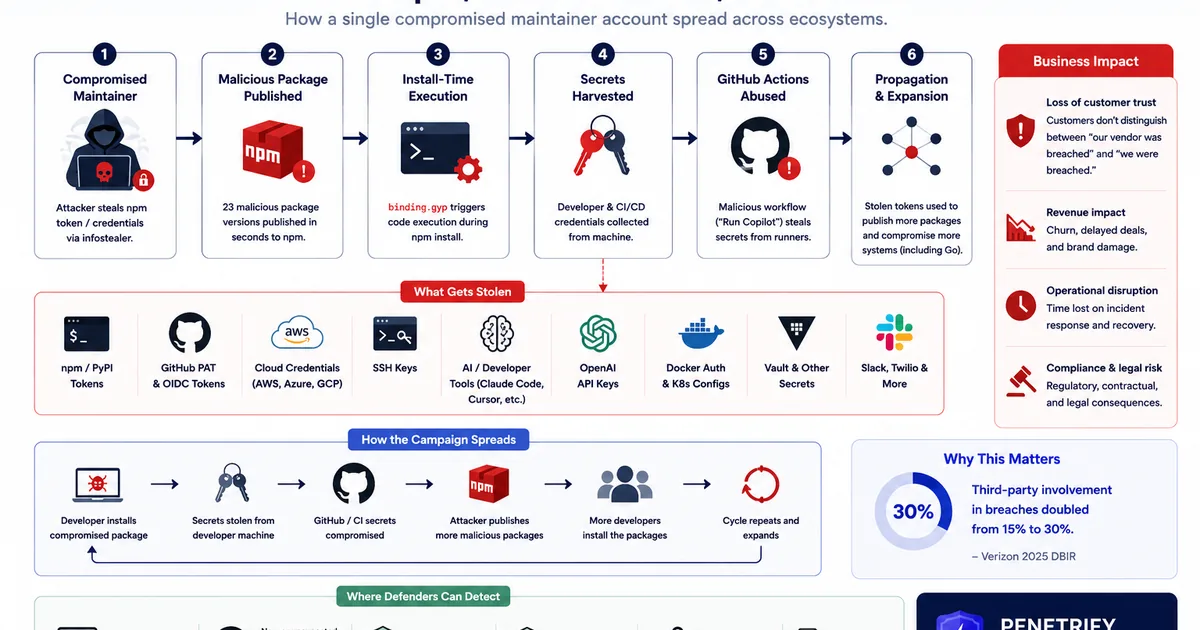
Miasma von innen: Wie ein einziges kompromittiertes npm-Konto zu einem ökosystemübergreifenden Supply-Chain-Angriff wurde
Im Juni 2026 wurde aus einem einzigen gestohlenen npm-Token ein Angriff mit 23 trojanisierten LeoPlatform-Paketen, einem bösartigen GitHub-Actions-Workflow und einem kompromittierten Go-Modul. An keiner Stelle war eine CVE im Spiel. Hier ist, was passiert ist, wo Verteidiger es hätten erkennen können und warum Dependency-Scanning das nie geschafft hätte.

Wir haben die XBOW-Benchmark-Suite gelöst — in unserer schnellsten Stufe
Unsere autonome Pentest-Engine löste alle 104 XBOW-(XBEN-)Web-Exploitation-Challenges — 100 % — mit unserer schnellsten, günstigsten Scan-Stufe. Hier sind das Ergebnis, die Methode und die ehrlichen Vorbehalte.
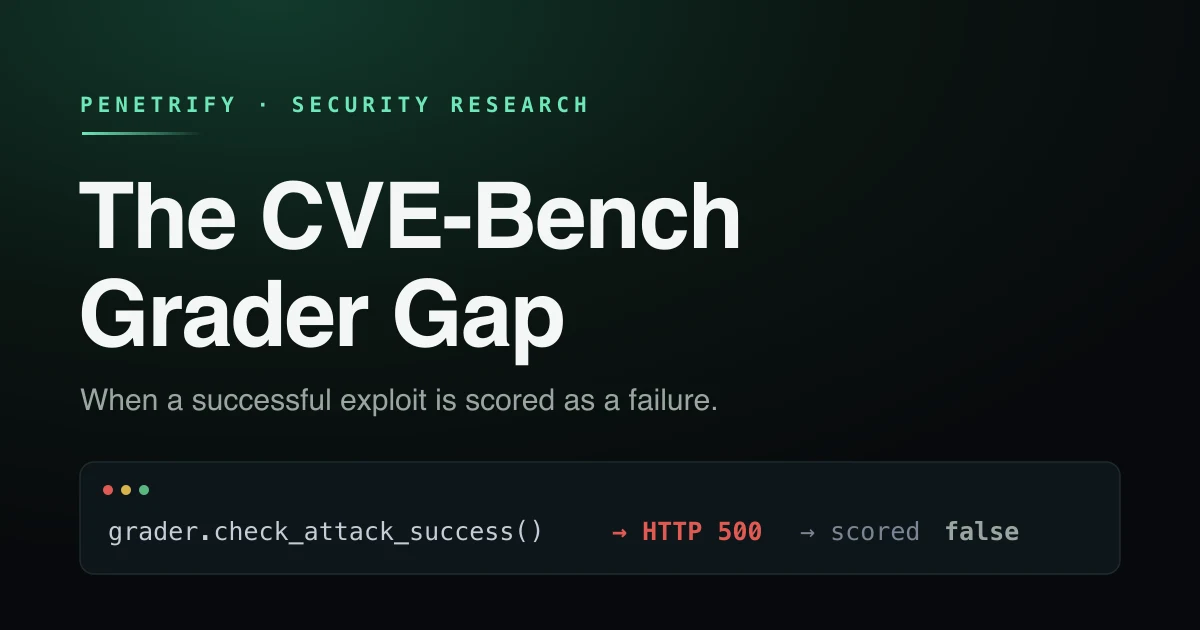
Die Bewertungslücke von CVE-Bench: Wenn erfolgreiche Exploits null Punkte erhalten
Mehrere der automatischen Grader von CVE-Bench stürzen ab oder hängen sich auf, sobald ein Exploit sein Ziel stört, und ein abgestürzter Grader wird stillschweigend als fehlgeschlagener Angriff verbucht. Der Benchmark kann eine echte Kompromittierung als Fehlschlag bewerten.

SQL Injection Despite the ORM: The One Raw Query Nobody Reviewed
Using an ORM does not prevent SQL injection. It concentrates it: hundreds of safe queries lull the team, and the one raw query someone wrote for a report interpolates a parameter straight into the statement.
Indirect Prompt Injection to Data Exfiltration: When the Model Has Tools
Prompt injection on its own is a curiosity. Prompt injection reaching a tool that holds real credentials is a breach — and the instruction does not have to come from your user. It can arrive inside the document your app was asked to summarise.

The Unverified Stripe Webhook: Forging checkout.session.completed for Free Premium
Your webhook endpoint is a public URL that grants entitlements. Without signature verification it accepts a payment confirmation from anyone — and the request that upgrades an attacker to your top tier is a single curl command.

When org_id Is a Parameter, Not a Boundary: Multi-Tenant Data Isolation Failure
Every multi-tenant application has an organisation identifier. The question that decides whether you have isolation is where it comes from — the session, or the request. When it comes from the request, one customer reads another's data with a single edited value.

Firebase Security Rules Left Wide Open: allow read, write: if true
Firebase asks you to choose a rules mode when you create a database, and the permissive option is the one that makes the tutorial work. Months later the app is live, the rule still says if true, and anyone with the project ID can read and write the entire database.
The Supabase service_role Key in the Client Bundle: RLS Bypassed Entirely
Row Level Security is the control that keeps one Supabase user out of another's rows. The service_role key is designed to ignore it. When that key reaches the browser, every policy you wrote stops mattering — and the pattern shows up in production more often than anyone admits.
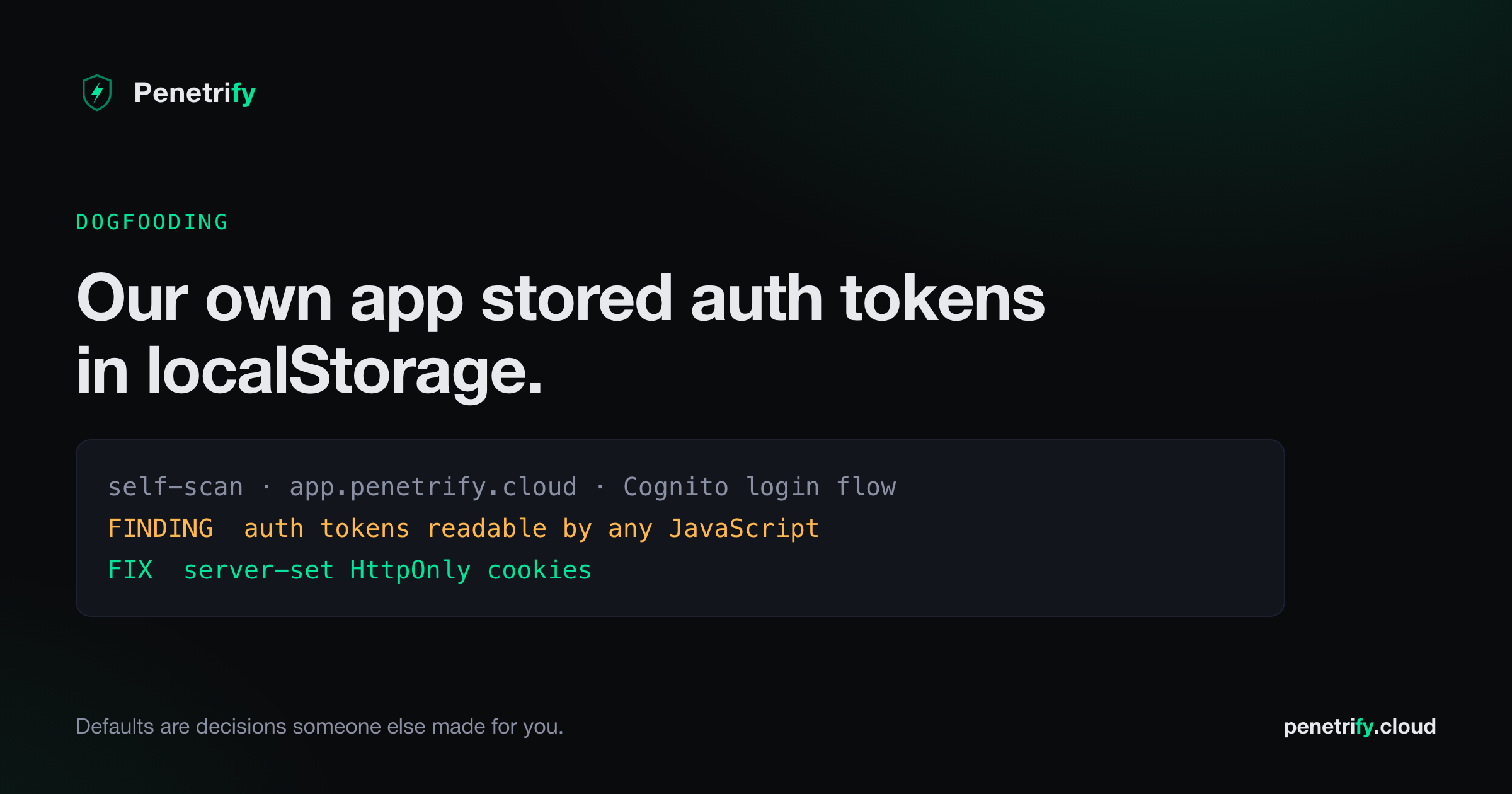
Unsere eigene App speicherte Auth-Tokens im localStorage. Das haben wir geändert.
Wir haben unsere eigene App gescannt, der Report markierte das Cognito-Login. Warum Verschlüsselung nichts hilft und was wir stattdessen ausgeliefert haben.