penetrify.cloud/blog
Blog
Análisis, guías y actualizaciones desde la vanguardia de la seguridad autónoma.
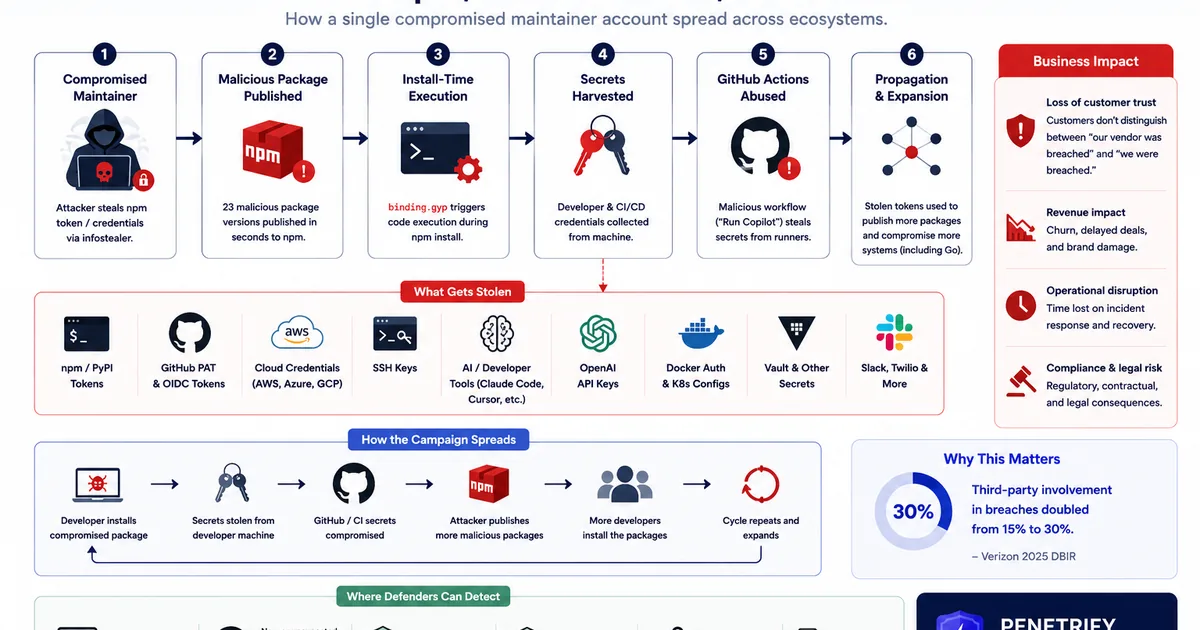
Miasma al descubierto: cómo una sola cuenta de npm comprometida se convirtió en un ataque a la cadena de suministro multiecosistema
En junio de 2026, un único token de npm robado dio lugar a 23 paquetes troyanizados de LeoPlatform, un workflow malicioso de GitHub Actions y un módulo de Go comprometido. No hubo ningún CVE en ninguno de los pasos. Esto es lo que ocurrió, dónde los defensores podrían haberlo detectado y por qué el escaneo de dependencias nunca iba a conseguirlo.

Superamos la suite de benchmarks XBOW — en nuestro nivel más rápido
Nuestro motor de pentesting autónomo resolvió los 104 retos de explotación web de XBOW (XBEN) — el 100% — usando nuestro nivel de escaneo más rápido y económico. Aquí está el resultado, el método y las advertencias honestas.
La brecha del evaluador de CVE-Bench: cuando los exploits exitosos puntúan cero
Varios de los evaluadores automáticos de CVE-Bench se bloquean o se cuelgan en el momento en que un exploit altera su objetivo, y un evaluador bloqueado se registra silenciosamente como un ataque fallido. El benchmark puede puntuar un compromiso genuino como un fracaso.

SQL Injection Despite the ORM: The One Raw Query Nobody Reviewed
Using an ORM does not prevent SQL injection. It concentrates it: hundreds of safe queries lull the team, and the one raw query someone wrote for a report interpolates a parameter straight into the statement.
Indirect Prompt Injection to Data Exfiltration: When the Model Has Tools
Prompt injection on its own is a curiosity. Prompt injection reaching a tool that holds real credentials is a breach — and the instruction does not have to come from your user. It can arrive inside the document your app was asked to summarise.

The Unverified Stripe Webhook: Forging checkout.session.completed for Free Premium
Your webhook endpoint is a public URL that grants entitlements. Without signature verification it accepts a payment confirmation from anyone — and the request that upgrades an attacker to your top tier is a single curl command.

When org_id Is a Parameter, Not a Boundary: Multi-Tenant Data Isolation Failure
Every multi-tenant application has an organisation identifier. The question that decides whether you have isolation is where it comes from — the session, or the request. When it comes from the request, one customer reads another's data with a single edited value.

Firebase Security Rules Left Wide Open: allow read, write: if true
Firebase asks you to choose a rules mode when you create a database, and the permissive option is the one that makes the tutorial work. Months later the app is live, the rule still says if true, and anyone with the project ID can read and write the entire database.
The Supabase service_role Key in the Client Bundle: RLS Bypassed Entirely
Row Level Security is the control that keeps one Supabase user out of another's rows. The service_role key is designed to ignore it. When that key reaches the browser, every policy you wrote stops mattering — and the pattern shows up in production more often than anyone admits.
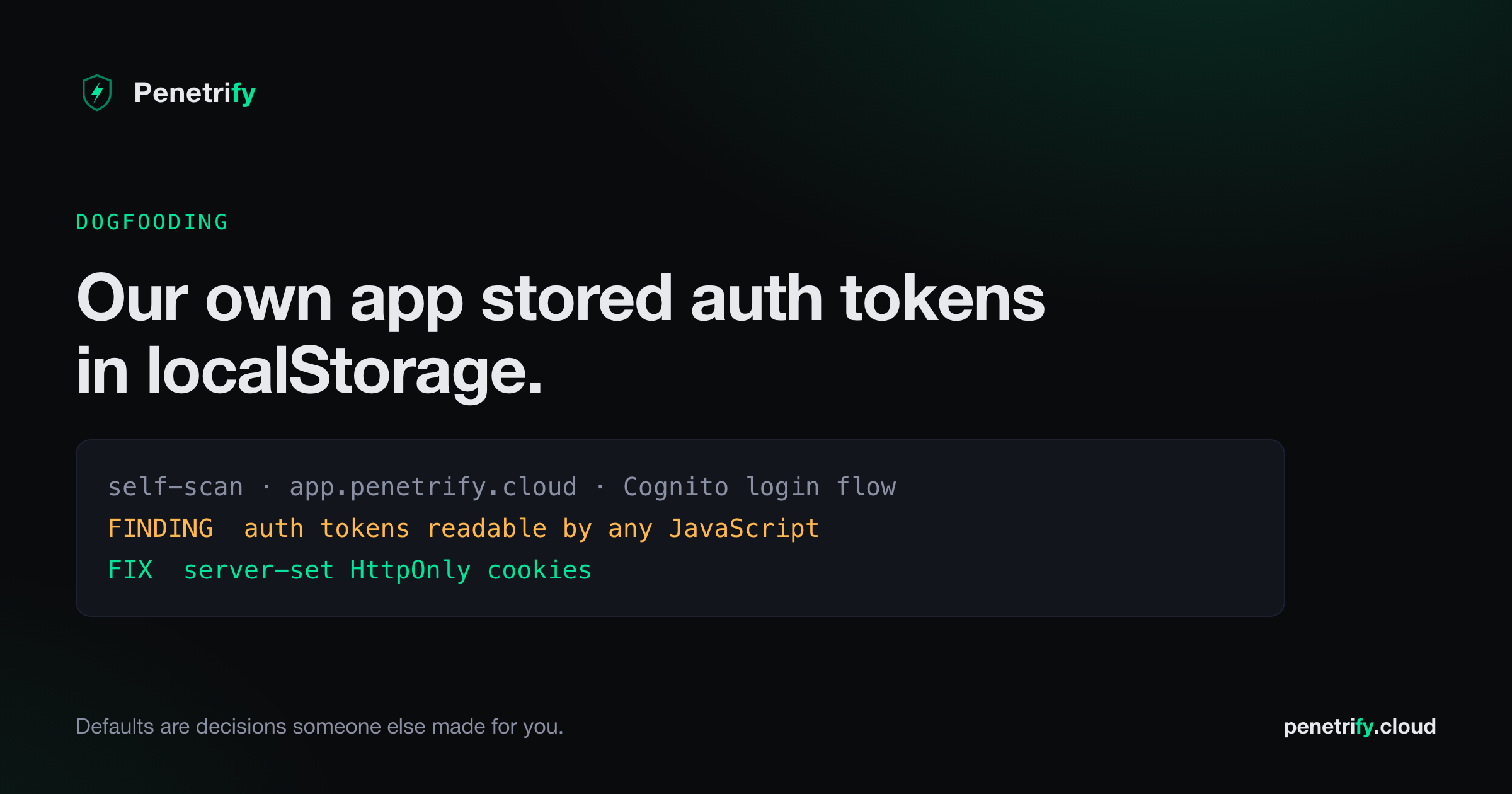
Nuestra propia aplicación guardaba los tokens de autenticación en localStorage. Esto es lo que cambiamos.
Escaneamos nuestra propia aplicación y el informe marcó el login con Cognito. Por qué cifrar no sirve y qué desplegamos en su lugar.