Automate API Security Testing Before Attackers Find What You Missed
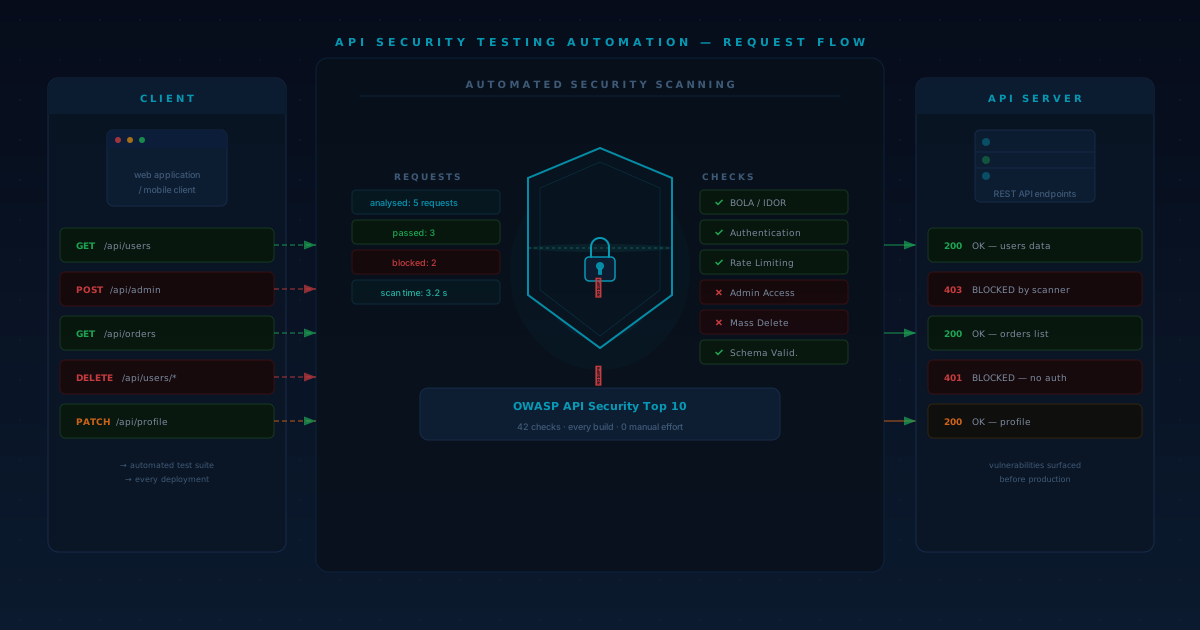
84% of organizations experienced an API security incident last year. Quarterly pentests can't protect APIs that change every sprint. Penetrify runs autonomous API security testing on every deployment, catching OWASP Top 10 vulnerabilities in minutes, not months.
The problem
Your APIs Are Exposed Between Pentests
Coverage gaps grow with every release
A mid-size team ships 50–200 changes per week. New endpoints go live without security validation, and nobody notices until an attacker does.
The feedback loop is too slow
When a developer learns about a vulnerability six weeks after writing the code, context is lost and the fix is expensive. Shift-left security catches issues when the fix takes five minutes.
Costs scale linearly, coverage doesn't
As your API surface grows, manual testing costs increase proportionally. Automation inverts this equation: marginal cost per endpoint approaches zero.
How it works
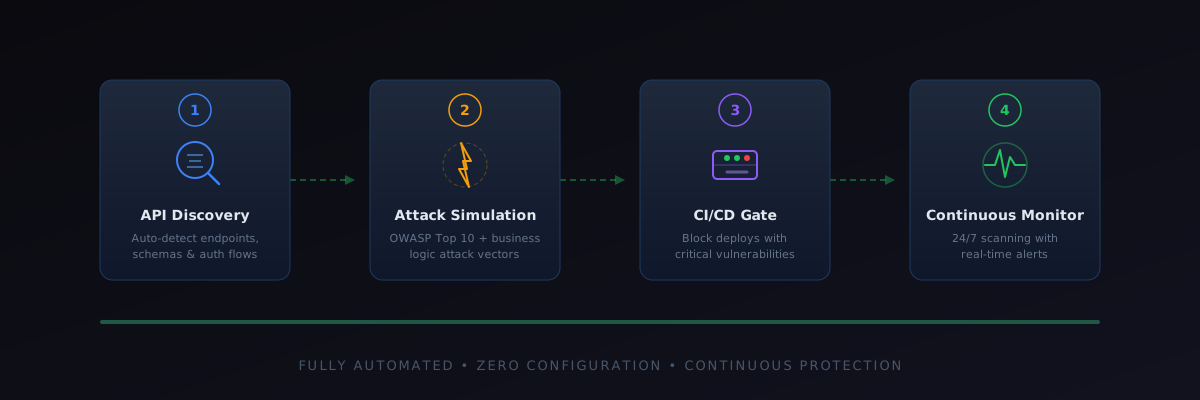
Autonomous API Security Testing in Your Pipeline
OWASP API Security Top 10
Full OWASP API Security Top 10 Coverage
AI-powered advantages
What Sets AI-Powered Testing Apart
Multi-Step Attack Chain Simulation
Real attackers chain vulnerabilities: information disclosure → privilege escalation → data exfiltration. Penetrify models these attack paths, finding chained exploits individual scans miss entirely.
Adaptive Testing Intelligence
When Penetrify encounters an unexpected API response, it adapts. It probes deeper where it finds anomalies and generates new test cases based on observed behavior.
Business Logic Flaw Detection
AI-powered testing understands that a payment API allowing negative amounts is a vulnerability. Traditional scanners can't detect logic violations that require application context.
Beyond Pattern Matching
Static rule-based scanners only find what they're programmed to find. AI-driven testing reasons about API behavior from first principles, catching emerging vulnerability patterns.
Developer experience
Built for Engineering Teams, Not Just Security Teams
Pipeline-Native Results
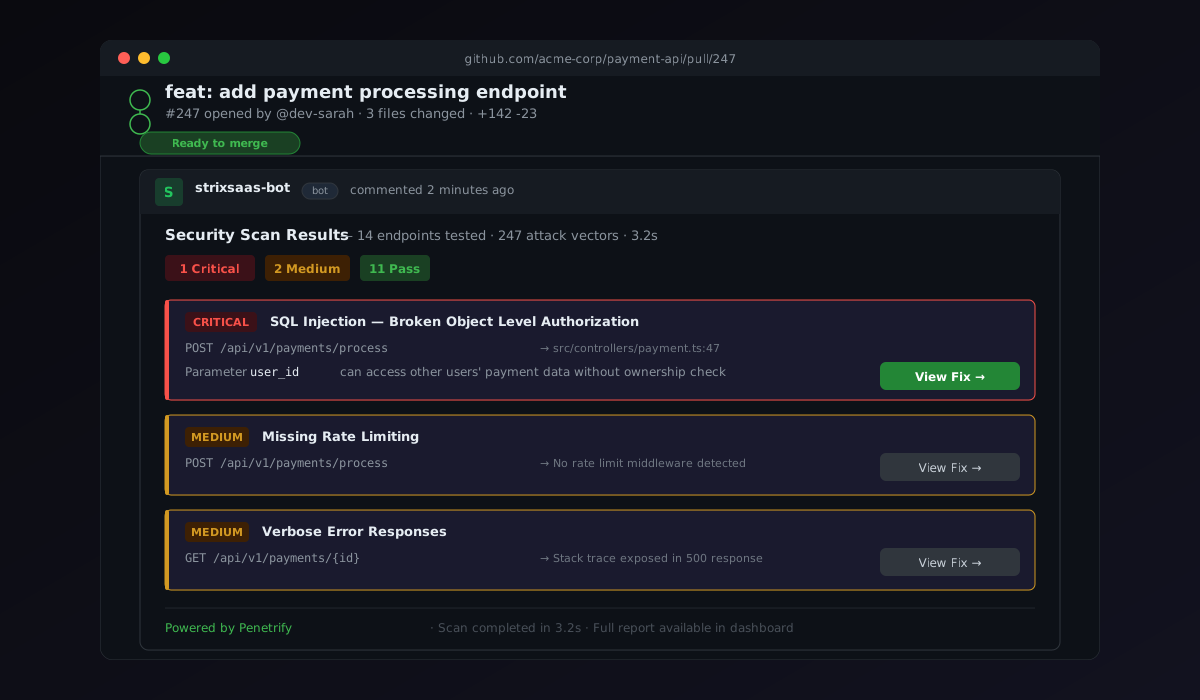
Findings appear as PR comments with severity, affected endpoint, reproduction steps, and remediation guidance, in the same workflow developers use to write code.
Developer-Friendly Severity Model
Penetrify classifies vulnerabilities by exploitability and business impact, not just theoretical severity. Reduces alert fatigue and focuses developer attention on what matters.
Quality Gates That Don't Break Flow
Configure which severity levels block merges and which create tracked issues. Critical findings gate deployment. Medium findings become backlog items with SLA tracking.
Self-Healing Test Configurations
As your APIs evolve (new endpoints, changed schemas, updated auth flows), Penetrify adapts automatically. No manual test maintenance required.
Getting started
From Zero to Automated API Security in Days
Connect your pipeline
Install the Penetrify plugin for GitHub Actions, GitLab CI, Jenkins, or any CI/CD platform. Point it at your OpenAPI spec or let auto-discovery map your endpoints.
Run your first scan
Penetrify performs a baseline assessment of your entire API surface. See your current vulnerability posture, prioritized by severity and exploitability, with remediation guidance.
Enable pipeline gates
Configure which findings block deployments and which create tracked issues. From this point, every commit is automatically tested before reaching production.
Continuous improvement
Penetrify learns your API's patterns over time, reducing false positives. Weekly reports track vulnerability counts, fix rates, and mean time to remediation.
Comparison
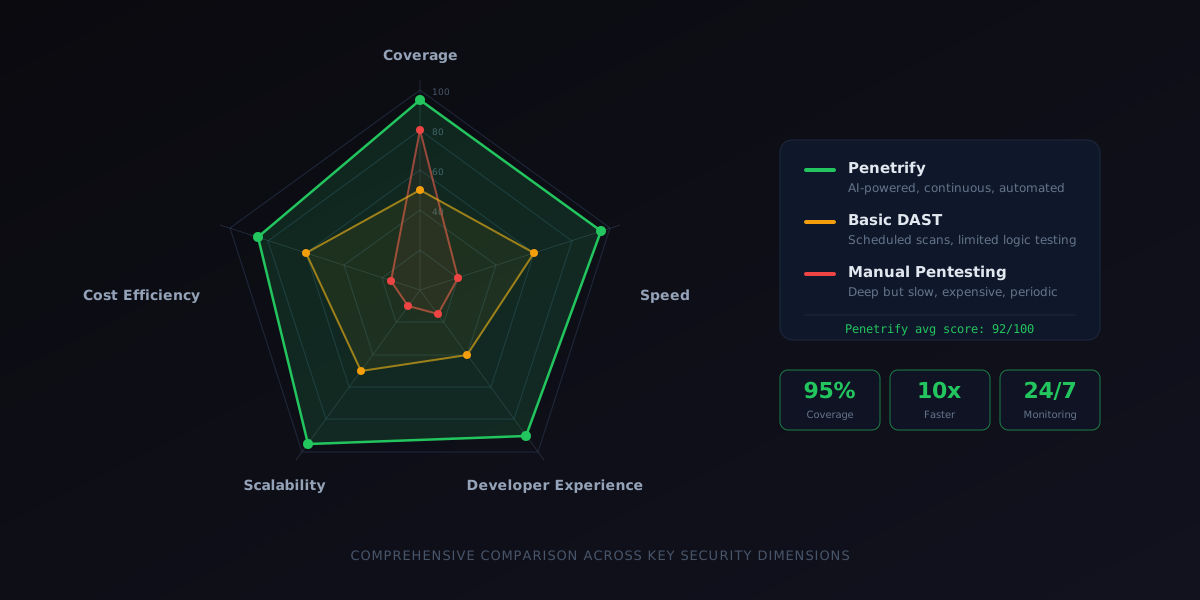
API Security Testing Automation Compared
FAQ
API Security Testing Questions
Trusted across industries
API Security Testing for Every Industry
Financial Services
Continuously validate PCI DSS and SOC 2 compliance across payment APIs and account endpoints. Automated testing provides the audit trail regulators require and catches authorization flaws before they become reportable incidents.
Healthcare
Protect HIPAA-regulated patient data flowing through clinical APIs, EHR integrations, and telehealth platforms. Multi-role authorization testing enforces provider, patient, and admin access boundaries.
SaaS Platforms
Test tenant isolation at the API layer, verifying data, configurations, and operations are properly scoped to each tenant, even at the property level within shared endpoints.
E-commerce
Protect checkout flows, inventory APIs, and customer data against price manipulation, cart tampering, and account takeover attacks that plague online retail.
Guides
Featured guides
Get started
Start Your Free API Security Scan
No credit card required. Connect your CI/CD pipeline in minutes and see your first vulnerability findings before the end of the day.