Penetration Testing That Runs on Every Deployment, Not Once a Quarter
Your team ships daily. Your pentest happens quarterly. Supply chain attacks on CI/CD pipelines surged 30% in 2025. Attackers target pipelines because security testing isn't keeping up. Penetrify embeds AI-powered penetration testing in every deployment.
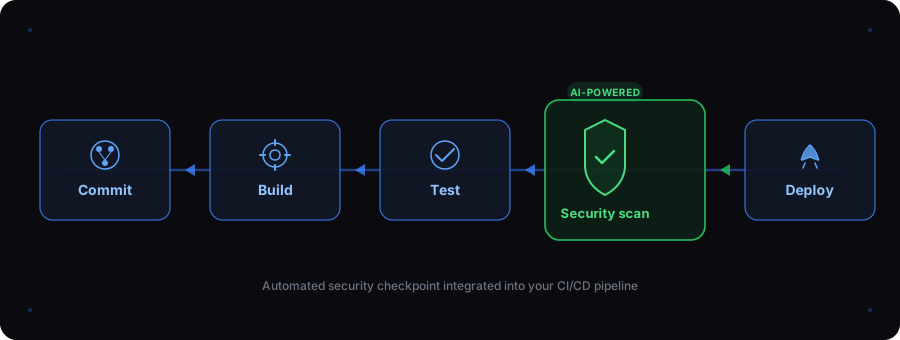
The gap
The Gap Between How You Ship and How You Test
The numbers tell the story
84% of organizations experienced an API security incident in the past year. The tj-actions/changed-files compromise hit 23,000+ repositories. These weren't zero-days. They exploited the fact that CI/CD pipelines are trusted but unmonitored.
What a quarterly pentest misses
A mid-size team pushes 50–200 changes per week. Between quarterly assessments, that's 600–2,400 untested changes reaching production. New endpoints, modified auth flows, updated dependencies: all going live without security validation.
The cost of delayed feedback
When a developer learns about a vulnerability six weeks after writing the code, context is lost and the fix is expensive. CI/CD penetration testing compresses this feedback loop to minutes, catching issues when a fix takes five minutes, not a multi-sprint refactor.
How it works
How Penetrify Integrates Into Your Pipeline
Connect in Minutes
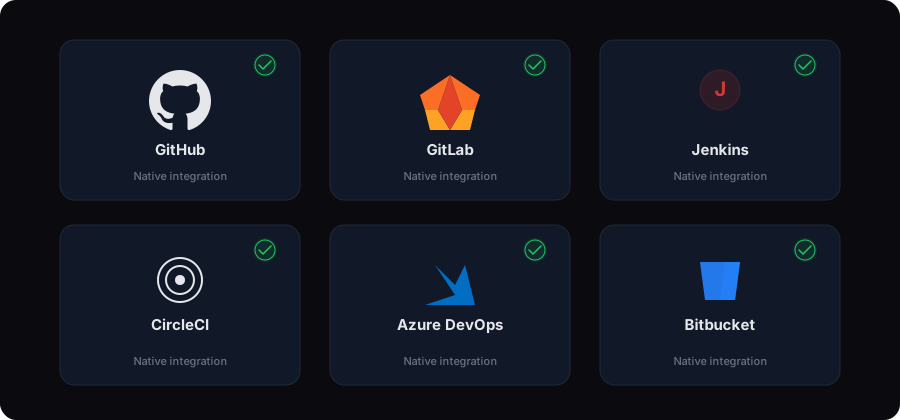
Install the Penetrify plugin for GitHub Actions, GitLab CI/CD, Jenkins, CircleCI, Azure DevOps, or Bitbucket Pipelines. Point it at your API spec or let auto-discovery map your endpoints. First scan runs within minutes.
Three Testing Tiers, Automatic Selection
Fast tier (15–30 min) runs on every PR. Standard tier (30–60 min) runs on protected branch merges. Deep tier (30–90 min) runs nightly. Penetrify automatically selects the right tier based on what changed.
Results Where Developers Work
Findings appear as PR comments, not in a separate dashboard. Each finding includes severity, affected endpoint, reproduction steps, and remediation guidance. Fix issues in the same workflow where you write code.
Quality Gates You Control
Configure which findings block merges, which block production deployment, and which create tracked issues. Critical vulnerabilities stop the deployment. Medium findings enter the backlog with SLA tracking.
Four testing layers
Four Layers of Security in One Pipeline Stage
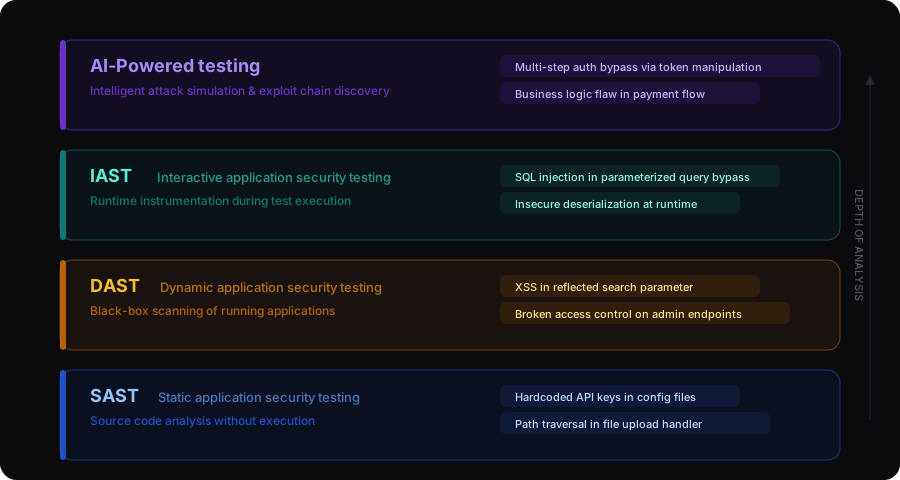
Pipeline infrastructure
Pipeline Security, Not Just Application Security
Secrets Exposure Detection
Scans for credentials, API keys, tokens, and certificates in source code, config files, build outputs, and environment variables. Tests that secrets management follows vault-based patterns with minimum required permissions.
Supply Chain Validation
Verifies that external dependencies (GitHub Actions, Docker base images, build tools) use immutable references (SHA pinning, not mutable tags). The 2025 tj-actions compromise exploited mutable tag references. Penetrify flags every unpinned dependency.
Artifact Integrity
Validates that build artifacts haven't been tampered with between build and deployment. Tests artifact signing, signature verification at each handoff point, and that unsigned artifacts are rejected by deployment processes.
Configuration Hardening
Audits pipeline configurations against security baselines: branch protection rules, deployment approval requirements, service account permissions, and logging completeness. Tests that security controls can't be bypassed through pipeline config changes.
Getting started
From Quarterly Pentests to Continuous Security in One Week
Connect and baseline
Install the plugin, connect your repository, and run a baseline scan. See your vulnerability posture in hours. Configure the fast tier on PRs and start with critical-only blocks to avoid disrupting flow.
Enable pipeline gates
Enable the standard tier on protected branch merges. Review initial findings, suppress false positives, and calibrate quality gate thresholds based on your team's workflow.
Expand and tune
Enable the deep tier on a nightly schedule. Review supply chain findings and fix pinned dependency issues. Calibrate thresholds based on your risk tolerance.
Continuous improvement
Penetrify adapts as your APIs evolve, with no manual test maintenance required. Weekly reports track vulnerability trends, fix rates, and mean time to remediation.
Comparison
CI/CD Penetration Testing Compared
| Capability | Quarterly Pentest | SAST/DAST Only | Penetrify |
|---|---|---|---|
| Testing frequency | 4× per year | Every build | Every build |
| Vulnerability classes covered | Broad (time-limited) | Known patterns | Patterns + logic + chains |
| Multi-step attack chains | Yes | No | Yes (AI-powered) |
| Business logic testing | Yes | No | Yes |
| Pipeline infrastructure testing | No | No | Yes |
| Supply chain validation | No | Limited | Full |
| Time to results | 2–4 weeks | 2–30 minutes | 15–30 min (fast tier) |
| Developer feedback channel | PDF report | Dashboard | PR comments |
| Setup time | Weeks | Days | Under 1 hour |
Trusted across industries
Trusted by Teams Shipping at Scale
SaaS & Platform Companies
Continuously validate multi-tenant isolation, API authorization boundaries, and authentication flows across dozens of microservices. Every merge to main is tested before it reaches customers.
Financial Services
Meet PCI DSS and SOC 2 continuous monitoring requirements. Automated testing provides the evidence trail auditors need and catches authorization flaws before they become reportable incidents.
Healthcare Organizations
Protect HIPAA-regulated APIs handling patient data. Authorization testing against your intended-role model ensures provider, patient, and admin access boundaries hold across every deployment.
E-commerce Platforms
Test checkout flows, inventory APIs, and payment integrations on every release. Price manipulation, cart tampering, and account takeover vulnerabilities are caught before they reach production.
Startups Moving Fast
Use Penetrify as your entire security testing program from day one. Ship secure code from the first commit instead of waiting until you can afford a dedicated security team.
Native integrations for every major CI/CD platform
FAQ
CI/CD Penetration Testing Questions
Guides
Featured guides
Get started
Add Penetration Testing to Your Pipeline
Free trial, no credit card required. Connect your CI/CD pipeline in minutes and see your first vulnerability findings before end of day.